

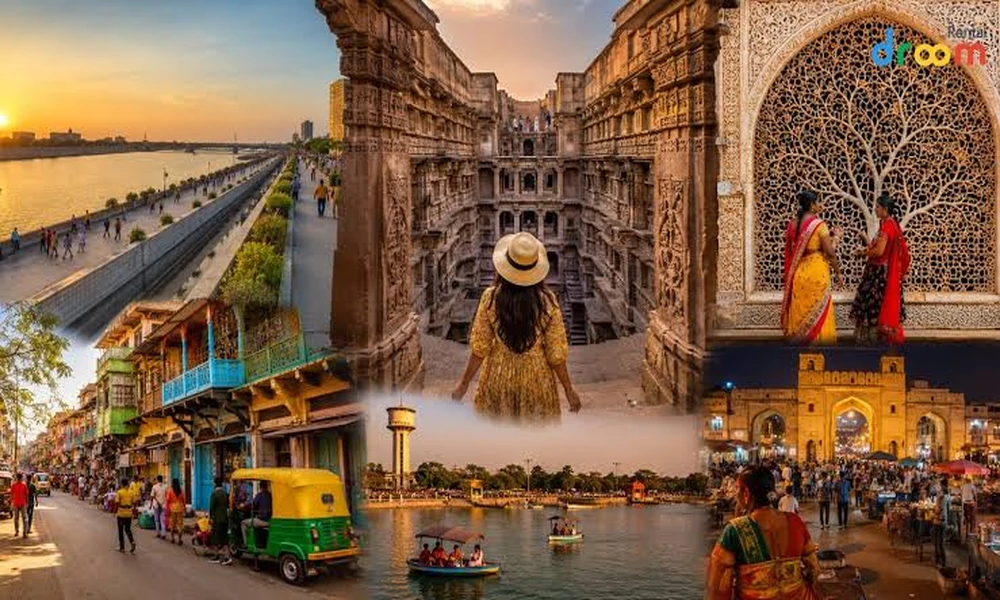
Ahmedabad matched the weekend I was looking for: good walking, well-planned meals and some time to reflect on the gaps between landmarks. In the old city, to the east of the Sabarmati River, wooden houses, neighbourhood temples and commercial lanes make history part of daily life.
My itinerary was to devote Saturday to the walled city and Sunday to a stepwell in Asarwa. This allowed space for a tour, a leisurely lunch and afternoons spent inspecting carved facades.
Friday evening: arriving in Ahmedabad for the weekend
Ahmedabad International Airport (AMD), officially known as Sardar Vallabhbhai Patel International Airport, is the city’s main airport. I preferred arriving on Friday evening so I could start exploring the city early the next morning. I chose business class flights for the extra legroom, comfortable seating and priority services, which made the journey more relaxing. After landing, I arranged a hotel transfer to reach my accommodation with ease.
For this itinerary, accommodation with straightforward access to Kalupur is useful. Check the hotel’s exact entrance and vehicle access, particularly when staying within the old city. Narrow lanes are part of its character, and a clear drop-off plan makes arriving with luggage simpler.
Saturday morning: walking from Ahmedabad’s Kalupur to Jama Masjid
I began my tour from Heritage Walk on a Saturday morning, starting from the Swaminarayan Temple located in Kalupur. This walk takes us to the Jama Masjid via the Old City Tour. Various pols, palaces, temples, and markets demonstrated the different layers of a concentrated area. Remember to confirm the reporting time while booking your tour slot.
Pols fascinated me because of their small details. Traditional pols consist of houses constructed of carved wood, community wells, and bird feeders on higher ground. Courtyards and houses were usually close to each other depending upon the weather and living conditions.
Saturday lunchtime: Ahmedabad’s local flavours around a Gujarati thali
Food fitted naturally between visits. For breakfast, fafda brought a crisp gram-flour bite, accompanied by papaya sambharo and chutney. Jalebi supplied the sweeter contrast. A small serving suited the morning, especially with a fuller lunch ahead. Fresh preparation mattered more to me than ordering an extensive selection.
At lunch, a Gujarati thali offered a broader introduction through vegetables, dal, kadhi, breads, rice and accompaniments. The selection changes between kitchens and with seasonal availability. I took my time to let its sweet, sour, and savoury notes come through. Reserve a table for a relaxed weekend sitting, mention dietary requirements and ask about the day’s seasonal preparations.
Saturday afternoon: Khadia’s finely carved wooden houses in Ahmedabad
In the afternoon, I explored Khadia’s old wooden houses. I also visited Mangaldas ni Haveli to see more examples of traditional woodwork. Visitors can benefit by looking more closely at the brackets, balconies and doors. These features make domestic architecture a fascinating experience in Ahmedabad.
While this walk was spontaneous for me, a guide still helped me understand what is permissible when entering houses or photographing the dwellers. This walk can give visitors an opportunity to see the locality’s activities just as they happen on a normal day.
Sunday morning: Ahmedabad’s carved stone at Bai Harir ni Vav
The Bai Harir ni Vav, alternatively called the Dada Harir stepwell, offered my Sunday a new architectural destination to explore. It is in Asarwa and consists of five levels of stone columns. A mosque and a tomb make up the entire complex. These are good enough for a stopover outside the weekend’s main walking route.
Make sure you have some time to observe the lighting on the columns as well as the views from level to level. Wear comfortable shoes and carry information regarding accessibility and transportation options.
Final reflections on a well-spent Ahmedabad weekend
Ahmedabad’s charms lay in the interlinking of the city’s various destinations. The pols offered a glimpse into how community neighbourhoods were organised. The Gujarati thali introduced local flavours, while Bai Harir ni Vav highlighted the practical design of historic architecture. Khadia added another layer to the experience through its finely carved wooden details.
